Background: Healthcare accreditation is considered to be an essential quality improvement tool. However, its effectiveness has been critiqued.
Methods: Twenty-four interviews were conducted with clinicians (five), nurses (six), managers (eight), and basic/translational researchers (five) from eight European cancer centres on changes observed from participating in a European cancer accreditation programme. Data were thematically analysed and verified with participants and checked against auditor’s feedback.
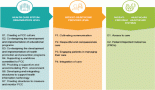
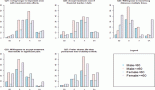
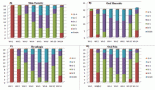
Results: Four change categories emerged: (i) the growing importance of the nursing and supportive care field (role change). Nurses gained more autonomy/clarity on their daily duties. Importance was given to the hiring and training of supportive care personnel (ii) critical thinking on data integration (strategic change). Managers gained insight on how to integrate institutional level data (iii) improved processes within multidisciplinary team (MDT) meetings (procedural change). Clinical staff experienced improved communication between MDTs (iv) building trust (organisational change). Accreditation improved the centre’s credibility with its own staff and externally with funders and patients. No motivational changes were perceived. Researchers perceived no changes. The auditor’s feedback included changes in 13 areas: translational research, biobanks, clinical trials, patient privacy and satisfaction, cancer registries, clinical practice guidelines, patient education, screening, primary prevention, role of nurses, MDT, supportive care, and data integration. However, our study revealed that staff perceived changes only in the last four areas.
Conclusion: Staff perceived changes in data integration, nursing and supportive care, and in certain clinical aspects. Accreditation programmes must pay attention to the needs of different stakeholder groups, track changes, and observe how/why change happens.