Purpose: Oral cavity squamous cell carcinoma (OCSCC) is the most prevalent malignancy of the head and neck malignancy in India. In locally advanced OCSCC, a combination of definitive surgery followed by postoperative radiotherapy (RT), with or without concurrent chemotherapy, offers superior oncologic outcomes compared to definitive chemoradiotherapy alone. The prognosis of T4b OCSCC with infratemporal fossa (ITF) involvement largely depended on the degree of invasion. Tumours confined to the lower or mid ITF tend to have relatively better outcomes than those with extensive or high-level involvement. This study prospectively evaluates the treatment outcomes in patients with OCSCC involving the lower or mid ITF who underwent curative surgical resection followed by adjuvant concurrent chemoradiotherapy (CCRT).
Methods: This is a single-arm prospective interventional study between January 2021 and October 2022, which included 20 patients of clinically T4b OCSCC as per the American Joint Committee on Cancer (8th edition) with lower or mid ITF involvement. Patients with tumour invasion into the skull base, carotid artery, prevertebral fascia or pterygomaxillary fissure were excluded to maintain a uniform study cohort. All patients were treated with curative intent with surgery include ITF clearance followed by adjuvant CCRT. Primary endpoint was to evaluate loco-regional control (LRC) and secondary end point was to assess acute toxicities according to the Common Terminology Criteria for Adverse Events v5.0. Kaplan-Meier survival analysis was done for assessing disease free survival (DFS), overall survival (OS).
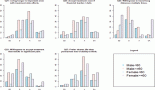
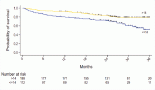
Results: Median follow-up was 11.5 months (4–21 months). The median age was 39 years (range 32–67) with 95% males. Buccal mucosa was most common site with 19 patients (95%). All patients were clinically cT4b (Stage IV) stage involving low/mid ITF involvement with low ITF were 15(75%) and mid ITF patients were 5(25%) patients. All patients underwent definitive ITF clearance and received adjuvant CCRT with weekly concurrent cisplatin 35–40 mg/m2 to a median number of 6 cycles (5–7 cycles). Median RT dose was 64 Gray (60–66). 08 (40%) patients had grade 3 oral mucositis and odynophagia each. Skin toxicity and oral pain was present in 6(30%) and 5(25%) patients, respectively. Grade 4 toxicities were not observed. LRC at 3 months was 73.68% with 4 local and 1 locoregional failures only. LRC at 1 year was 36.8% with 8 local, 2 local-distant, 1 loco-regional-distant and 1 distant failure only. Median DFS was 10.4 months and median OS was not reached; four patients died. LRC at 3 months was better for patients with low ITF disease as compared to mid ITF disease (85.7% versus 40% (p = 0.04) and at 1 year was 42.8% versus 40% (p = 0.50).
Conclusion: Locally advanced OCSCC with low ITF involvement may benefit from tri-modality therapy of surgery with ITF clearance followed by adjuvant CCRT. The acute toxicity observed in study was within acceptable limits.