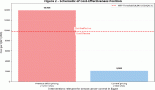
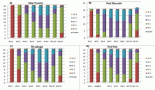
Computed tomography (CT) scans are widely used diagnostics. Despite their diagnostic advantages, their increasing reliance necessitates critical examination of projected lifetime cancer risks due to radiation exposure, a stochastic effect linearly correlated with dose. CT-associated cancers are estimated to increase significantly. The paediatric population is disproportionately vulnerable, facing higher risks even from lower doses. Current risk models may underestimate cancer incidence due to Dose and Dose Rate Effectiveness Factor complexities. High-risk scans such as whole-body CT, abdominal CT and brain CT, significantly increase exposure. A critical re-evaluation of guidelines to prioritise the risk-benefit ratio for CT use. Future diagnostic and screening strategies must prioritize innovation in alternative non-ionizing modalities like magnetic resonance imaging, ultrasonography and thermography with integration of Artificial Intelligence. ‘As Low As Reasonably Achievable’ principle is essential, aiming to limit ionizing radiation doses to near zero to safeguard public health.

Supporting oncology professionals through education
The content on this site is intended for healthcare professionals only