Background: Cervical cancer is the fourth most frequently diagnosed cancer and the fourth leading cause of cancer death in women. Most patients present with advanced stages, and curative treatment is not possible. The purpose of this study is to assess the symptom response and treatment-related toxicities in advanced cervical cancer patients treated with the QUADSHOT (QS) regimen.
Methods: This prospective cohort study enrolled patients with histologically proven advanced cervical cancer candidates for hypo fractionated palliative radiation therapy and not candidates for curative treatment. Patients were treated with a QS radiotherapy regimen (3.7 Gy per fraction twice a day, 6 hours apart on Saturday and Sunday only, every 21 days, to a total dose of 44.4 Gy). Response to treatment was assessed at baseline, at 2, 3 and 6 months after treatment completion.
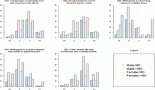
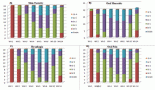
Results: The mean age of the 53 enrolled patients was 56 years (SD, 10.4). Most patients (43 or 81%) had stage IIIB–IVB illness. Of the 50 patients assessed at 2 months, 43 (86%) had a complete response (CR) from vaginal bleeding, 36 (72%) from vaginal discharge and 25 (50%) from pelvic pain. In the 3rd–5th months, 46 patients were assessed; CR rates were 42 (91%), 37 (80%) and 29 (63%) for vaginal bleeding, vaginal discharge and pelvic pain, respectively. In the sixth month, 19 patients were eligible for assessment, and CR rates were 18 (94%), 17 (89%) and 13 (68%), respectively. The most common acute toxicity was fatigue, followed by grade 1 diarrhea. Four patients had grade three bladder complications.
Conclusion: The QS regimen has rapid symptom relief for patients with advanced cervical cancer with minimal toxicities. The QS regimen is recommended for symptom palliation in settings with restricted resources.