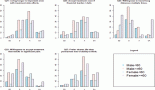
The use of geriatric assessment (GA) by oncology specialists in Mexico is low. We aimed to explore factors associated with the evaluation of individual GA domains by Mexican oncology specialists. We performed an exploratory analysis of a sequential explanatory mixed-methods study consisting of an online cross-sectional survey of Mexican oncology specialists and follow-up interviews on the use of GA in cancer care. For each GA domain, we performed multivariable logistic regression analyses with the frequency of evaluation of the domains as the dependent variable (dichotomised as never/rarely/sometimes versus most of the time/always). A p-value <0.05 was considered significant. Qualitative data from the interviews were analysed inductively. Of 196 respondents, 62% were male, 50% were surgical oncologists, 51% took care of >10 patients per day and 61.7% had access to a geriatrician. Self-perceived confidence in managing common geriatric conditions was associated with the evaluation of specific GA domains. For instance, self-perceived confidence in managing dementia (OR 2.72; 95% CI 1.42–5.51, p = 0.008) was associated with cognition evaluation, while for evaluation of falls, self-perceived confidence in evaluation of falls (OR 6.31; 95% CI 3.19–12.46, p < 0.001) was significantly associated. Follow-up interviews showed quality and appropriateness of evaluations may not be ideal: in many cases, physicians do not use guideline-recommended tools. For example, evaluation of cognition is commonly performed through non-validated methods which may miss the detection of patients with an impairment in this domain, partly due to limitations in knowledge and time to use recommended tools. In conclusion, self-perceived confidence in evaluating and managing common situations in older adults was associated with the evaluation of GA domains as part of everyday practice in a sample of oncology specialists in Mexico. This analysis supports the use of educational interventions to boost knowledge and confidence regarding the proper use of validated GA tools among oncology specialists.

Supporting oncology professionals through education
The content on this site is intended for healthcare professionals only