Introduction Population ageing has increased the proportion of older adults with cancer, a group characterised by high comorbidity burden and marked clinical heterogeneity. Comprehensive Geriatric Assessment (CGA) is recommended by international guidelines to identify vulnerabilities and guide safer, more personalised treatment decisions. However, its implementation remains limited, and there is scarce information about its use in Uruguay.
Objective To describe perceptions, practices and barriers regarding the use of CGA among oncologists and trainees in Uruguay.
Materials and Methods We conducted an observational, cross-sectional study using an anonymous electronic questionnaire. Medical oncologists, radiation oncologists and physicians in training (postgraduate oncology training) involved in the clinical care of patients with cancer were included. A descriptive analysis was performed, and chi-square tests were used to compare frequencies between groups (p < 0.05).
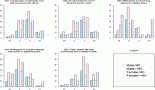
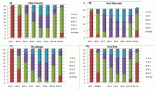
Results A total of 60 physicians responded, representing approximately 60% of the national oncology community. Although 55% reported being familiar with the American Society of Clinical Oncology guideline, only 31.7% reported using formal CGA tools, and just 11.7% applied CGA routinely. Informal evaluation based on clinical judgement predominated. Functional status was the most frequently assessed domain (79%), while physical performance was the least used (>70% never or almost never). Participants familiar with the guideline assessed life expectancy and cognition more frequently, with statistically significant differences (p = 0.048). The most commonly reported barriers were lack of resources for referral, limited physical space and insufficient training. Among those unfamiliar with the guideline, perceived limited evidence and uncertainty about which tool to use were predominant barriers.
Conclusions CGA use in Uruguay is low, revealing a substantial gap between knowledge and implementation. The identified barriers highlight the need to strengthen training, improve available resources and promote institutional strategies to support CGA integration, with the aim of improving care for older adults with cancer.