Aims:
1. To audit our performance as a dedicated gynaecologic oncology unit and to analyse how it has evolved over the years.
2. To retrospectively evaluate the outcome of advanced ovarian cancer treated with neoadjuvant chemotherapy (NACT) followed by
interval surgery versus upfront surgery.
Methods and results: One hundred and ninety-eight patients with advanced epithelial ovarian cancer (EOC) who were treated from 2004 to 2010 were analysed. Eighty-two patients (41.4%) underwent primary surgery and 116 (58.6%) received NACT. Overall, an optimal debulking rate of 81% was achieved with 70% for primary surgery and 88% following NACT. The optimal cytoreduction rate has improved from 55% in 2004 to 97% in 2010. In primary surgery, the optimal debulking rate increased from 42.8% in 2004 to 93% in 2010, whereas in NACT group the optimal cytoreduction rate increased from 60% to 100% by 2010.
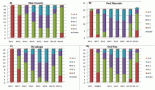
On the basis of the surgical complexity scoring system it was found that surgeries with intermediate complexity score had progressively increased over the years.
There was a mean follow-up of 21 months ranging from 6 to 70 months. The progression-free survival and overall survival (OS) in patients undergoing primary surgery were 23 and 40 months, respectively, while it was 22 and 40 months in patients who received NACT. However, patients who had suboptimal debulking, irrespective of primary treatment, had significantly worse OS (26 versus 47 months) compared with those who had optimal debulking.
Conclusions: As a dedicated gynaecologic oncology unit there has been an increase in the optimal cytoreduction rates. The number of complex surgeries, as denoted by the category of intermediate complexity score, has increased.
Patients with advanced EOC treated with NACT followed by interval debulking have comparable survival to the patients undergoing primary surgery. Optimal cytoreduction irrespective of primary modality of treatment gives better survival.