Breast cancer is the most prevalent malignancy among women under 50. Improvements in diagnosis and treatment have yielded an important decrease in mortality in the last 20 years. In many cases, chemotherapy and radiotherapy develop side effects on the reproductive function. Therefore, before the anti-cancer treatment impairs fertility, clinicians should offer some techniques for fertility preservation for women planning motherhood in the future.
In order to obtain more available oocytes for IVF, the ovary must be stimulated. New protocols which prevent exposure to increased estrogen during gonadotropin stimulation, measurements to avoid the delay in starting anti-cancer treatment or the outcome of ovarian stimulation have been addressed in this review.
There is no evidence of association between ovarian stimulation and breast cancer. It seems that there are more relevant other confluent factors than ovarian stimulation. Factors that can modify the risk of breast cancer include: parity, age at full-term birth, age of menarche, and family history.
There is an association between breast cancer and exogenous estrogen. Therefore, specific protocols to stimulate patients with breast cancer include anti-estrogen agents such as letrozole. By using letrozole plus recombinant Follicular Stimulating Hormone (FSH), patients develop a multifollicular growth with only a mild increase in estradiol serum levels.
Controlled ovarian stimulation (COS) takes around 10 days, and we discuss new strategies to start COS as soon as possible. Protocols starting during the luteal phase or after inducing the menses currently prevent a delay in starting ovarian stimulation.
Patients with breast cancer have a poorer response to COS compared with patients without cancer who are stimulated with conventional protocols of gonadotropins.
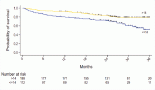
Although many centres offer fertility preservation and many patients undergo ovarian stimulation, there are not enough studies to evaluate the recurrence, breast cancer-free interval or mortality rates in these women.