Background: Due to fundamental biological differences, de-novo metastatic breast cancer (MBC) generally exhibits a more favourable prognosis compared to recurrent MBC. There is a notable absence of databases documenting de-novo MBC patients from North-East India.
Materials and methods: A retrospective analysis of 195 patients was performed from 1 January 2020 to 31 December 2022, covering a span of 3 years. Clinical, pathological and radiological data were extracted from medical records.
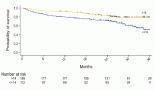
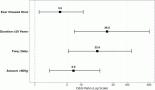
Results: The median age at diagnosis was 50 years. The median duration of symptoms was 5 months, with 66% of patients being postmenopausal. The predominant histological type was infiltrating ductal carcinoma. Baseline receptor status indicated that 108 patients (55.38%) were hormone receptor (HR) positive, 97 patients (49%) were positive for human epidermal growth factor receptor and 34 patients (16.4%) had triple-negative breast cancer. The most frequent sites of metastasis included bone (28.7%), lung (27%) and liver (17.4%), followed by non-regional lymph nodes (11.8%) and brain (5.6%). Among the 195 patients, 136 (70%) received treatment. Seventy-three patients (37.4%) underwent single-agent chemotherapy with taxanes, 48 patients (24.2%) received poly-chemotherapy and 12 patients (6.15%) were treated with up-front hormone therapy. Of the 110 patients who were HR positive, 57.2% received endocrine therapy (15 patients (13.6%) on tamoxifen and 48 patients (43.6%) on aromatase inhibitors). Among the 97 patients who were Her2-neu positive, 63 patients (65%) received trastuzumab-based therapy. The study reported a 3-year overall survival rate of 24%. Multivariate analysis indicated that the presence of oligo-metastasis, along with Her2-positive and HR-positive status, correlated with improved patient outcomes.
In conclusion, our findings suggest that patients with Her2-positive, HR-positive and oligometastatic disease experience significantly enhanced outcomes. Enhancing access to novel therapeutic options for our patient population is likely to result in improved prognoses.