Introduction: Human Papillomavirus (HPV) has been associated with benign and malignant lesions in different epitheliums. The relationship between specific genotypes of high-risk HPV and some human cancers is well established. The aim of this work was to detect the HPV genotypes present in head and neck squamous cell carcinoma (HNSCC).
Methods: We evaluated 71 samples of patients with histopathological diagnosis of HNSCC. The DNA extraction was conducted with the QIAGEN commercial kit. HPV detection and genotyping were performed by reverse hybridisation (INNO-LiPA) following the commercial specifications.
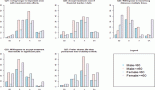
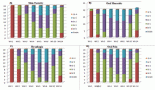
Results: The mean age of the patients evaluated was 60.7 ± 13.11 years. The distribution of the lesions included 25 (35.20%) cases of squamous cell carcinoma (SCC) of the oral cavity, 23 (32.39%) of larynx, 16 (22.50%) of the oropharynx, 4 (5.63%) of paranasal sinus, and 2 (2. 80%) cases of SCC of the nostril. Of the patients, 78.9% were males, and of these 76% were tobacco users and 67.6% were alcohol consumers. The viral DNA was detected in 67.6% of the samples. The oral cavity and the larynx were the highest HPV-positivity sites with 35.40% and 29.10% respectively. The most frequent genotype was 16 as single infection (18.70%), or in combination with another HPV types. In the oral cavity and larynx were present the genotypes 16 or the combination 6 and 51 in 11.76% and 14.28% respectively; and in the oropharynx the most frequent genotype was 16 in 22.50% of the cases, and in the paranasal sinus 50% presented infection with HPV-6. We observed that tumours with most advanced size and stage presented greater HPV positivity.
Conclusions: This study shows a high percentage of HPV positivity in SCC is mainly associated with high-risk HPV. It is important to highlight that viral infection, especially HPV-16, could be a risk factor in HNSCC progression.