Background: Cancer is a leading cause of mortality worldwide, with significant regional disparities in its burden. In Pakistan, the sixth most populous country, cancer contributes significantly to the healthcare burden, yet comprehensive epidemiological studies are limited.
Methods: A population-based analysis was conducted using Global Burden of Disease (GBD) 2019 data. Cancer metrics, including incidence, mortality and disability-adjusted life years (DALYs), were extracted and stratified by age, gender, cancer type and geographic region. Annual average percent changes (AAPCs) were calculated to evaluate temporal trends. This study aimed to analyse trends in cancer incidence, mortality and DALYs in Pakistan from 1990 to 2019, using data from the GBD study.
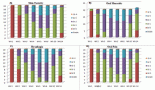
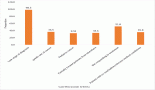
Results: Total cancer incidence increased from 1.28 million cases (1990) to 2.77 million cases (2019), with an annual average percent change (AAPC) of 0.11%. Mortality rose from 73,424 deaths (age-standardised rate (ASR): 122.16) to 179,773 deaths (ASR: 153.52) (AAPC: 0.79%) and DALYs increased from 2.41 million (ASR: 3,363.75) to 6.27 million (ASR: 3,439.9) (AAPC: 0.85%). Breast cancer remained the leading contributor to the disease burden, accounting for 51,438 cases, 32,118 deaths and 1.12 million DALYs in 2019. Pancreatic cancer showed the highest growth in incidence (AAPC: 3.39%), while ovarian cancer exhibited the largest increases in mortality (AAPC: 3.16%) and DALYs (AAPC: 5.85%). Punjab reported the highest burden, with 1.49 million cases in 2019. Female cancer incidence and mortality consistently exceeded male figures, with an AAPC of 0.15% in incidence and 1.07% in mortality. Age-specific analyses revealed that leukaemia was the leading cancer in children aged 0–14, while lung cancer dominated among males over 50 years.
Conclusion: The rising cancer burden in Pakistan underscores the need for a robust, nationwide cancer registry and targeted interventions. Public health policies must address risk factors such as smoking, hepatitis infections and socio-economic disparities to curb this escalating crisis.