Background: Breast cancer (BC) care faces challenges in early detection, timely diagnosis and comprehensive management. Disparities persist, with underserved populations facing the greatest barriers. Addressing these requires policies that support consistent, evidence-based practices and enhance healthcare capacity and technology advancements. This document presents the development of the Breast Cancer Care Quality Index (BCCQI), supported by evidence to promote equitable care and improve BC outcomes globally, and discusses its adoption as a strategic tool within National Cancer Control Plans.
Methods: A two-part methodology identified challenges in BC care and defined dimensions, targets and indicators for the BCCQI, aligned with the World Health Organization Global Breast Cancer Initiative. A literature review and analysis of existing United Nations (UN) frameworks informed the initial structure of the index, which was later refined through expert feedback from a multidisciplinary panel representing diverse backgrounds and geographies.
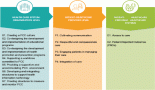
Findings: The BCCQI is organised into four dimensions, comprising 10 targets and 23 indicators to guide the development of country-specific roadmaps. It should promote progress across key domains: health equity, patient centricity, universal access, care quality and treatment effectiveness. The Index is conceived as a dynamic tool, continuously refined through real-world application and emerging evidence.
Interpretation: Despite the previous initiatives, progress has been slow, likely due to practical details and country-specific guidance remaining limited due to scarce real-world evidence. Promoting national ownership and empowering action aligned with local challenges and opportunities, a flexible, strategic framework may help address these gaps.