Background: Cancer remains a significant public health challenge, being the second leading cause of death in urban areas and the fourth in rural regions of India. The estimated 1.15 million new cancer cases in 2018 are projected to double by 2040. Despite the critical importance of early detection, cancer screening rates in rural India remain alarmingly low. This study investigates barriers to breast and cervical screening among women in remote villages of Karnataka using the Health Belief Model (HBM) as a theoretical framework.
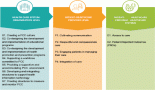
Methods: A community-based screening program for oral, breast and cervical cancer, was implemented in three taluks of Chikkaballapur district, Karnataka, from September to November 2021. Quantitative data from 4,974 screened women were complemented by qualitative interviews with 292 women who did not consent to screening, particularly for breast and cervical cancer. Interviews were guided by HBM constructs perceived susceptibility, severity, barriers, benefits, cues to action and self-efficacy and analysed thematically.
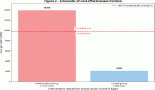
Results: Out of the 4,974 women who participated in screening clinics, less than 10% consented to clinical breast examination and none to cervical screening. Major barriers to screening included socio-cultural factors (stigma, lack of awareness, peer pressure), economic constraints (work priorities and financial insecurity), psychological barriers (fear of outcomes and lack of healthcare trust) and physical challenges (accessibility and seasonal constraints). Fear of treatment outcomes and financial implications were prominent psychological deterrents. Mitigation strategies were noted to address these barriers, including awareness campaigns, flexible camp timings and local stakeholder engagement.
Conclusion: Addressing barriers to cervical and breast cancer screening requires a holistic, community-centred approach informed by theoretical models like HBM. Sustainable interventions must prioritise awareness, accessibility and affordability to bridge critical healthcare gaps and reduce the burden of cancer in rural India.