Background: Cancer is a major public health challenge in West Africa, with a significant proportion of cancer-related deaths attributed to distant metastasis. De novo metastatic cancer (DnMC), where metastasis is detected at diagnosis, presents considerable therapeutic challenges, particularly in limited-resource settings where novel treatments are often unavailable and/or unaffordable.
Aim: To determine the prevalence, incidence and clinicopathological characteristics of patients diagnosed with DnMC at a major radiotherapy center in West Africa.
Methods: This was a single-institution-based quantitative cross-sectional study. Data on the prevalence and incidence of DnMC were retrieved from a hospital-based cancer registry whereas patients’ demographic and clinicopathologic data were extracted from patients’ medical records and analysed with STATA software (version 16). Descriptive statistics were used to summarise patient- and tumour-related characteristics.
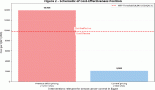
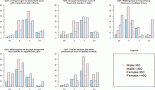
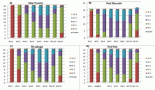
Results: The prevalence and incidence of DnMC were 15.2% and 5.3%, respectively, with a 36% overall incidence rate of metastatic cancer. The mean age was 50.9 years (SD 15.2), ranging from 15 to 90 years, with a male-to-female ratio of 1:1.6. Also, 28.8% had a history of alcohol intake whereas 13.7% were (tobacco) smokers. Additionally, 10.3% of the patients had a positive family history of cancer. Pain (28.2%) was the most common presenting symptom, followed by bleeding (16.5%). In all, 34.9% had an Eastern Cooperative Oncology Group (ECOG) performance status of 0 whereas 33.3% were ECOG 1. The gastrointestinal tract (25.8%) and breasts (17.6%) were the most frequent primary cancer sites, whereas 4.4% had metastatic cancers of unknown primary origin. The most frequent sites of distant metastasis were the lungs (34.6%), liver (28.9%) and bone (13.8%). Adenocarcinoma was the most prevalent histological type (35.2%).
Conclusion: There was a relatively high rate of DnMC compared with high-income countries, emphasising the need for early detection and expanded access to comprehensive cancer care in limited-resource settings.