Background: The coronavirus disease 2019 (COVID-19) pandemic presents serious challenges to cancer care because of the associated risks from the infection itself and the disruption of care delivery. Therefore, many professional societies have published recommendations to help manage patients with cancer during the current pandemic. The objective of our study is to assess the national responses of Middle East North Africa (MENA) countries in terms of publishing relevant guidelines and analyse various components of these guidelines.
Methods: A survey based on the preliminary review of the literature regarding cancer care adaptations has been developed and then completed by a group of oncologists from the following Arab countries affected by the pandemic: Algeria, Egypt, Iraq, Jordan, Kuwait, Lebanon, Morocco, Oman, Saudi Arabia, Syria, Tunisia, United Arab Emirates and Yemen. The survey inquired about COVID-19 cases, national recommendations regarding general measures of COVID-19 prevention and patient care in oncology as well as their implementation about cancer care adaptations during the pandemic.
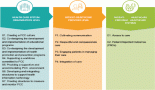
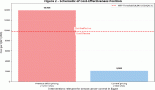
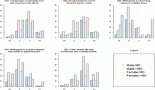
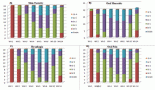
Results: Analysis of the COVID-19 pandemic-related guidelines revealed at least 30 specific recommendations that we categorised into seven essential components. All included countries had national guidelines except one country. Estimated full compliances with all specific category recommendations ranged from 30% to 69% and partial compliance ranged from 23% to 61%.
Conclusion: There is a very good response and preparedness in the Arab Middle East and North Africa region surveyed. However, there are inconsistencies in the various components of the guidelines across the region, which reflects the evolving status of the pandemic in each country as well as the lack of clear evidence-based guidelines for many of the issues in question. There is a need for a clear framework on essential components that should be included in these guidelines to assure providing the best guidance to the oncology community.