
Supporting oncology professionals through education
The content on this site is intended for healthcare professionals only
The content on this site is intended for healthcare professionals only
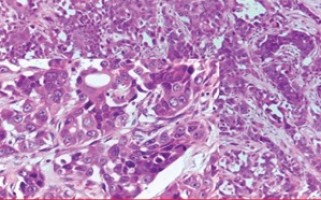
A new study using serial liquid biopsies to track how metastatic prostate cancer evolves under treatment pressure showed that androgen receptor (AR) alterations consistently emerged and were linked to poorer outcomes across therapies.
The findings, published Feb. 26 in Clinical Cancer Research, a journal of the American Association for Cancer Research, suggest that a single genomic test at diagnosis is no longer sufficient for managing advanced prostate cancer and support using real-time molecular testing to guide more personalised care in advanced prostate cancer.
Under the pressure of treatment, metastatic prostate cancer adapts—persistently rewiring itself to survive.
For clinicians, the challenge has always been timing: knowing when—and how—the disease has changed before it outruns the next line of therapy.
The new study led by Chinmay T. Jani, M.D., Chief Fellow, Haematology and Oncology, at Sylvester Comprehensive Cancer Centre, part of the University of Miami Miller School of Medicine, suggests those answers may already be circulating in patients’ blood.
Using serial liquid biopsies, the research team tracked how fragments of tumour DNA—known as circulating tumour DNA, or ctDNA—shift over time in patients with metastatic castration‑resistant prostate cancer (mCRPC).
Castration-resistant refers to prostate cancer that no longer responds to hormone therapy treatments.
The research was conducted as a multi-centre collaboration, bringing together investigators from Sylvester, the University of California, San Diego (UC San Diego), Moores Cancer Centre, the University of California, San Francisco, Scripps Research Institute and Guardant Health, Inc., reflecting the scale and translational reach of the work.
The project was developed and initiated at UC San Diego and conducted under mentorship from Rana McKay, M.D., FASCO, associate director, clinical research and professor of medicine, urology, and radiation medicine and Applied Sciences at the Moores Cancer Centre at UC San Diego.
“This work highlights the power of real-time molecular monitoring to inform precision medicine in advanced prostate cancer,” said McKay.
“As we develop the next generation of therapies, including novel AR-targeted agents and rational combinations, understanding how tumours evolve under treatment pressure will be critical to delivering the right drug to the right patient at the right time.”
Traditionally, genomic testing in prostate cancer has relied on tumour tissue—often collected years earlier, sometimes from sites that no longer reflect the dominant disease.
Liquid biopsy offers a different lens—capturing what the cancer is doing now.
In this real-world analysis, researchers examined paired ctDNA samples taken before treatment and again after treatment discontinuation, a window that often marks disease progression.
The study included more than 1,700 patients, drawing from one of the largest linked clinical genomic databases available.
Across all treatment groups, tumours showed a clear pattern: mutation burden increased after therapy, underscoring the selective pressure exerted by modern prostate cancer treatments.
“Cancer adapts under stress,” Jani said.“What we’re seeing in ctDNA is evolution happening in real time.”
Among the many genetic shifts observed, one stood out consistently—the androgen receptor, a central driver of prostate cancer growth.
After treatment with androgen receptor pathway inhibitors (ARPIs), PARP inhibitors and even taxane chemotherapy, patients were significantly more likely to develop AR amplifications or AR mutations, particularly in regions that allow the receptor to remain active despite therapy.
These alterations act like a master switch, keeping cancer growth signals turned on even when treatments are designed to shut them down.
Importantly, the presence of AR alterations was not just common—it was consequential. Across all treatment classes, patients with AR-altered tumours experienced shorter overall survival, faster treatment discontinuation and earlier need for subsequent therapy.
“AR alterations emerged as a consistent marker of more aggressive disease,” Jani said.“They mattered regardless of which therapy patients received.”
The study also revealed how resistance develops to newer targeted therapies.
Among patients treated with PARP inhibitors, some tumours acquired BRCA reversion mutations, restoring DNA repair pathways and blunting the effectiveness of treatment.
Others accumulated changes in genes such as TP53, EGFR and PIK3CA, hallmarks of genomic instability and treatment resistance.
Taken together, the findings suggest that a single genomic test at diagnosis is no longer sufficient for managing advanced prostate cancer.
As tumours evolve, their vulnerabilities—and their escape routes—change.
“Serial ctDNA testing gives us a moving picture, not a snapshot,” Jani said.“That has real implications for precision oncology.”
By capturing tumour evolution as it unfolds, liquid biopsy may help clinicians make more informed, timely decisions—adjusting treatment strategies before resistance becomes clinically evident.
The findings also support continued development of next-generation therapies, including androgen receptor degraders and novel combination approaches designed to overcome treatment resistance.
“This approach allows us to learn from the disease as it changes,” Jani said.
“And ultimately, to tailor care more precisely for each patient.”
While observational, the study provides a strong biological rationale for integrating serial ctDNA testing into routine care for men with mCRPC.
As precision oncology continues to advance, the ability to monitor tumour evolution through a simple blood draw may prove essential—not just for choosing the right treatment, but for choosing it at the right moment.
Source: University of Miami Miller School of Medicine
DOI: 10.1158/1078-0432
We are an independent charity and are not backed by a large company or society. We raise every penny ourselves to improve the standards of cancer care through education. You can help us continue our work to address inequalities in cancer care by making a donation.
Any donation, however small, contributes directly towards the costs of creating and sharing free oncology education.
Together we can get better outcomes for patients by tackling global inequalities in access to the results of cancer research.
Thank you for your support.