
Supporting oncology professionals through education
The content on this site is intended for healthcare professionals only
The content on this site is intended for healthcare professionals only
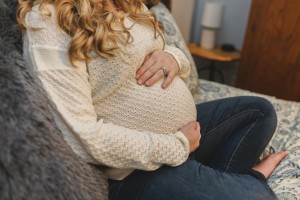
Postpartum breast cancer is diagnosed five to ten years after giving birth.
It is associated with a higher risk of metastasis and a lower survival rate compared with women who have not been pregnant or those diagnosed during pregnancy.
A team from the Institut Pasteur set out to understand the mammary gland mechanisms involved in tumour formation during involution, a major tissue remodelling process that occurs after pregnancy.
In a preclinical study the scientists reveal how senescence, a cellular response inducing stable cell cycle arrest, plays an ambivalent role during mammary gland involution.
While it is crucial for the normal tissue remodelling process in the mammary gland, senescence can also be hijacked by tumour cells to help them spread.
This discovery, published in Nature Ageing on February 18, 2026, suggests that targeting senescent cells during mammary gland involution could reduce the risk of postpartum breast cancer.
Mammary gland involution: a complex repair process
After pregnancy and breastfeeding, the mammary gland undergoes a major transformation to return to its initial state.
This process, known as postpartum involution, resembles the wound healing mechanism.
It involves the elimination of millions of alveolar epithelial cells, immune infiltration, remodelling of the extracellular matrix, and repopulation with adipocytes.
This major physiological event is also a critical moment, as the inflammatory environment created by involution results in a temporary but significant increase in the risk of developing breast cancer postpartum.
Moreover, women with this type of cancer present a higher risk of metastasis and a lower survival rate compared with women who have not been pregnant or were diagnosed during pregnancy or outside of pregnancy, regardless of the status of the hormone receptors expressed by breast cancer cells.
Importantly, this risk increases with maternal age, underscoring an urgent and still unmet medical need in women’s health.
How senescence orchestrates tissue remodelling
By studying mammary gland development and physiology in mice, the Cellular Plasticity in Age-Related Pathologies Unit at the Institut Pasteur, led by Han Li, demonstrated the presence of senescent cells specifically during mammary gland involution.
The scientists discovered that most of the cells entering senescence were milk-producing cells.
Using a pharmacological treatment capable of specifically killing senescent cells, the scientists established that senescence is a crucial phenomenon for the normal process of involution.
In fact, the absence of senescence delays tissue remodelling.
The work of Dr. Li's team also revealed that senescent cells are capable of actively recruiting immune cells (macrophages) by secreting molecules, thereby orchestrating the remodelling of the microenvironment.
"These results show that senescence is not simply an epiphenomenon; it is a key player in the complete tissue remodelling of the mammary gland during involution – a remarkable process of reconstruction that leaves no scars or lasting damage," explains Aurélie Chiche, first author of the study, a scientist in the Cellular Plasticity in Age-Related Pathologies Unit at the Institut Pasteur.
Senescence hijacked by cancer cells
The major discovery of the study is the paradoxical role of senescence: although it is beneficial for breast tissue repair after pregnancy, it can also be hijacked to promote tumour formation.
The scientists showed that senescent cells promote the plasticity of tumour cells via the factors they secrete.
These tumour cells adapt more easily to changes in their environment, enabling them to survive and spread more effectively through the body.
In mouse models of breast cancer tested by the scientists, treatment to eliminate senescent cells during involution significantly delayed tumour development and reduced metastasis formation.
"Our results suggest that targeted intervention to eliminate senescent cells during mammary gland involution could reduce the risk of postpartum breast cancer," concludes Han Li, last author of the study.
The findings pave the way for future research on human tissue samples to determine how these mechanisms could be used to develop preventive treatments to target a form of cancer that represents a critical unmet medical need.
Source: Institut Pasteur
We are an independent charity and are not backed by a large company or society. We raise every penny ourselves to improve the standards of cancer care through education. You can help us continue our work to address inequalities in cancer care by making a donation.
Any donation, however small, contributes directly towards the costs of creating and sharing free oncology education.
Together we can get better outcomes for patients by tackling global inequalities in access to the results of cancer research.
Thank you for your support.